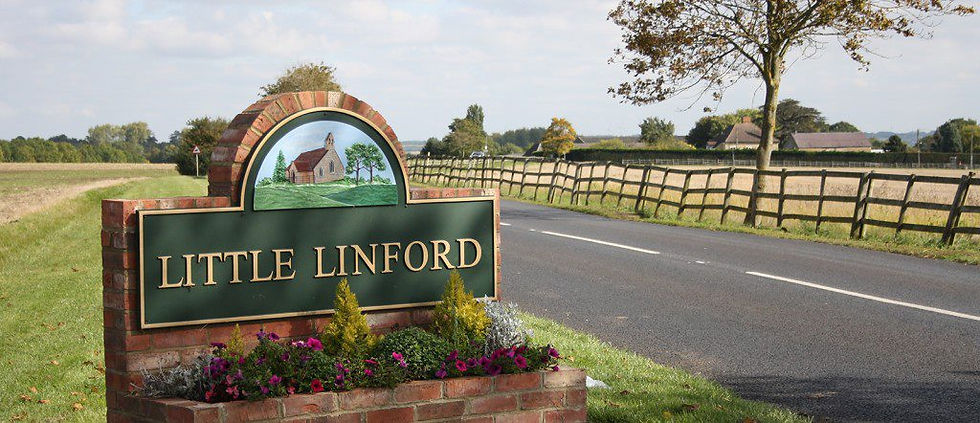
Haversham-cum-Little Linford Parish



FORM-BASED RESPONSE TO NEW TOWNS CONSULTATION
We have prepared the following question-by-question response to the Government's New Towns Consultation in response to several requests from residents for help in completing the consultation form. We strongly recommend responding via the form as this is likely to have more impact than an email.
Please note this was edited on 10 May to remove bullets to simplify copy and paste; add additional points re infrastructure in Q8; and Brownfield options in Q13 and again on 11 May to refine Q24 and Q25
It is just a suggested response and please feel free to copy, paste and personalise as you wish or to use your own words entirely. This will of course be the core of our own Parish Council response and is based on the discussion and resolution made at our meeting on 20 April 2026.
It is important that residents make their views known to the Government via the current consultation that closes at 11:59pm on 19 May. Detail of the consultation and the link to the online form can be found at www.gov.uk/government/consultations/new-towns-draft-programme.
Please note that their downloadable form has character restrictions for the responses so the responses below need to be copied into the online form.
A pdf of these suggested responses is also downloadable at Downloadable Response to make it easier should you wish to print:
SUGGESTED RESIDENT RESPONSE
Milton Keynes / Milton Keynes North
ABOUT YOU
Q1 Responding as: Local resident
Q2 Location: Milton Keynes
Q3 Resident Nearby
Q4 Not applicable
Q5 no response
Q6 no response
SECTION 3.1 – ASSESSMENT OF LOCATIONS
Q7. What positive features does this location have?
Selection: ☑ Tempsford (optional); or ☑ None
Milton Keynes has a number of established positive features as a location, including a strong economic base, a planned urban structure, and existing strategic infrastructure such as the M1 corridor and rail connectivity. It is also already identified for significant growth through adopted and emerging planning policy. However, these strengths reflect its role as an already successful and expanding city, rather than an appropriate location for designation as a new town.
Milton Keynes is identified for assessment; however, it does not possess the characteristics required to justify designation as a new town expansion area.
The inclusion of this area represents not an opportunity-led selection, but the reclassification of a strategically constrained landscape for expansion despite established planning direction and environmental limitation.
The area has already been assessed through:
- Plan:MK (2019)
- MK City Plan 2050 (Examination Stage post Regulation 19 consultation)
- Haversham-cum-Little Linford Neighbourhood Plan
These documents collectively confirm that the area is:
- rural in character
- environmentally constrained
- dependent on settlement separation
- not suitable for coalescing expansion
Milton Keynes is already a major growth location with provision for approximately 60,000 homes within existing plans, alongside infrastructure expansion.
There is also a significant national and local housing delivery issue:
- over 1 million homes with permission not built out
- large numbers of empty or under-occupied homes
= stalled developments nationally
- undeveloped allocations within Milton Keynes
This demonstrates that the issue is not land supply but delivery failure and under-utilisation of existing permissions.
Selecting additional large-scale growth here risks compounding delivery failure rather than addressing housing need. This is a fundamental mismatch between housing challenge diagnosis and spatial solution selection.
By contrast, Tempsford represents a more suitable alternative due to:
- rail-led strategic potential
- lower environmental constraint profile
- better alignment with standalone settlement principles
A key point for Milton Keynes specifically is that the programme itself acknowledges the proposal is not predominantly brownfield:
- approximately 50% is identified as greenfield land,
- particularly the northern and eastern expansion areas.
We assert that the Milton Keynes proposal does not align with a “brownfield first” planning approach.
Milton Keynes North itself contains multiple constraints including:
- Ouse Valley floodplain system
- Area of Attractive Landscape (AAL)
- Special Landscape Area designation
- archaeological sensitivity
- ecological corridors
- Best and Most Versatile agricultural land
This is not a neutral landscape — it is a multi-layered environmental system where expansion would trigger cumulative and irreversible harm rather than sustainable growth.
Milton Keynes is already a nationally significant growth location with extensive committed and emerging allocations. This means it is not an under-utilised opportunity area, but a settlement already subject to significant planned expansion. The primary constraint is not land availability but infrastructure delivery capacity and build-out performance of existing permissions.
Q8. Barriers or challenges affecting delivery
Selection: ☑ Milton Keynes
The identified barriers are not delivery challenges — they are fundamental constraints that indicate the area is unsuitable for allocation as a new town location.
Where multiple environmental, infrastructure and policy constraints converge, the issue is not delivery complexity but inherent inappropriateness for large-scale development
1. Conflict with existing development plans
The proposal conflicts with:
- Plan:MK
- MK City Plan 2050
- Haversham-cum-Little Linford Neighbourhood Plan
These plans exist to protect:
- settlement separation
- rural landscape character
- Ouse Valley integrity
Proceeding would represent policy reversal rather than policy alignment.
2. Flood risk and floodplain function
The site lies within the Great Ouse floodplain system, which performs a critical hydrological function.
Development would:
- reduce flood storage capacity
- increase surface water runoff
- increase downstream flood risk
This is not a manageable constraint — it is a system-level function that would be permanently altered by development.
3. Archaeology and heritage
The Ouse Valley contains:
- archaeological remains
- historic landscape systems
- buried heritage assets
Development would result in irreversible loss of nationally significant archaeological evidence and landscape context.
4. Best and Most Versatile agricultural land
The presence of Grade 2 and 3a land represents:
- permanent loss of productive soil resource
- reduction in food production capacity
- conflict with national agricultural protection policy
This is not temporary land use change — it is permanent national resource loss.
5. Infrastructure pressure
Existing services are already under strain:
- GP provision
- hospital capacity and location
- school places
- transport networks
Further expansion would not mitigate pressure — it would exceed planned infrastructure resilience.
The location also faces significant strategic infrastructure constraints which call into question the deliverability and sustainability of any further large-scale expansion associated with a New Town designation.
Electricity supply and grid capacity are already emerging as major constraints across the Milton Keynes and wider Oxford-Cambridge corridor area. The proposed Universal Studios development in Bedfordshire, alongside continuing housing and commercial growth allocations across Milton Keynes, will place substantial additional demand on the regional electricity network. National Grid and distribution network capacity in the area is already under pressure, with increasing concerns nationally regarding connection delays, reinforcement requirements and the ability of existing substations and transmission infrastructure to accommodate major new developments without extensive upgrades.
The consultation documents do not appear to demonstrate how sufficient electrical capacity would be secured for a further New Town-scale expansion, nor how cumulative impacts alongside other committed strategic developments would be mitigated. The absence of clear evidence regarding grid reinforcement, delivery timescales and funding mechanisms raises significant concerns regarding the realism and deliverability of the proposal.
Water supply infrastructure also presents a significant constraint. The South East and East of England are areas already identified as being under serious water stress, with increasing pressure from climate change, population growth and environmental obligations relating to abstraction and river protection. Existing concerns regarding long-term water resource availability in the Milton Keynes area have not been adequately addressed within the consultation material.
In addition, there are longstanding concerns regarding wastewater and sewerage infrastructure capacity, particularly at Cotton Valley Sewage Treatment Works, which already serves a substantial proportion of Milton Keynes and surrounding areas. Further strategic-scale growth risks placing additional strain on sewerage networks and treatment capacity unless major upgrades are delivered in advance. The consultation does not provide sufficient evidence that wastewater infrastructure can accommodate the scale of development proposed without adverse environmental impacts, including risks to local watercourses and protected habitats.
These cumulative infrastructure constraints materially undermine the suitability of the location for designation as a New Town and demonstrate that the area does not currently possess the resilient strategic utility infrastructure necessary to support development of this scale in a sustainable manner.
It would require:
- new transport networks
- utilities and drainage systems
- new schools and healthcare facilities
- major highway works including a new M1 Junction 14a
- new river crossings
6. Traffic and settlement impacts
Development would:
- increase congestion
- worsen rat-running through villages
- increase commuter delay
- reduce road safety
This represents structural change to rural-urban movement patterns, not incremental growth.
7. Public rights of way and wellbeing
Impacts include loss of:
- walking routes
- countryside access
- recreational networks
This results in reduced:
- mental health benefits
- wellbeing outcomes
- rural quality of life
These are not secondary effects — they are core landscape function losses.
8. Ecology and habitat systems
The area supports interconnected ecological networks including:
- bats
- dormice
- great crested newts
- farmland birds
Development would fragment habitats and disrupt ecological corridors that function at landscape scale. Areas such as Little Linford Wood and Linford Lakes Nature Reserve are just examples of these at risk sites.
9. Landscape designation (AAL/SLA)
The site lies within:
- Ouse Valley Area of Attractive Landscape (AAL)
- Special Landscape Area (SLA)
These designations reflect:
- high landscape sensitivity
- settlement separation value
- visual and character importance
National precedent confirms this sensitivity. In the Orchard Way Wind Farm appeal (APP/Y0435/A/12/2186522), the Secretary of State found:
- significant landscape harm
- materially harmful visual impacts
- cumulative harm sufficient to justify refusal
This confirms the Ouse Valley as a demonstrably sensitive landscape where large-scale development causes unacceptable harm.
The combination of flood risk, ecological connectivity, heritage sensitivity, landscape designation and infrastructure limitation is not a series of independent constraints but a single interlinked environmental and spatial system. This means that mitigation of individual effects does not resolve the cumulative system-level unsuitability of the location.
Q9. Has SEA identified main environmental issues?
Selection: ☑ No ☑ Milton Keynes
The SEA identifies:
- flood risk
- ecological sensitivity
- landscape impacts
However, it does not adequately reflect:
- cumulative AAL/SLA landscape harm
- archaeological sensitivity
- floodplain system function
- cumulative impact of northern Milton Keynes expansion
This creates a mismatch between environmental evidence and spatial decision-making outcomes.
Environmental assessment must inform selection decisions — otherwise it becomes descriptive rather than determinative.
Q10. Additional environmental information
Selection: ☑ Yes
The site forms part of a connected environmental system comprising:
- floodplain hydrology (Great Ouse system)
- ecological corridors
- archaeological landscape systems
- public rights of way network
- Best and Most Versatile agricultural land
These systems are interdependent. Once fragmented, they cannot be restored through mitigation.
This is a functional landscape system, not isolated environmental features.
Q11. Mitigation measures
Selection: ☑ No
There are no credible mitigation measures for:
- floodplain system disruption
- ecological fragmentation
- archaeological loss
- Best and Most Versatile agricultural land loss
- landscape designation impacts
These impacts are structural and irreversible. Mitigation would not reduce harm — it would only attempt to replace environmental function that cannot be replaced.
Q12. Other SEA comments
The SEA identifies environmental constraints but does not treat them as exclusionary factors.
This results in:
- recognition without protection
- assessment without weighting
- evidence without impact on decision-making
In areas where multiple nationally significant constraints converge, non-selection is the only policy-consistent outcome.
Failure to reflect this creates a disconnect between environmental evidence and spatial planning conclusions.
SECTION 3.3 – PROPOSED LOCATIONS
Q13. Are proposed locations appropriate?
Selection: ☑ No
Milton Keynes North is not an appropriate location for a new town designation.
It represents development pressure applied to a landscape defined by:
- floodplain function
- ecological connectivity
- archaeological sensitivity
- AAL and SLA designation
- Best and Most Versatile agricultural land
This is not an opportunity area — it is a multi-constraint environmental system where large-scale development would cause cumulative and irreversible harm.
Designating such an area as a growth location reverses the principle of spatial planning, which is
to direct development away from constrained landscapes rather than concentrate it within them.
A further significant concern is the impact of the proposed scale of development on existing rural communities and settlement identity within and surrounding the Milton Keynes North area. The cumulative expansion of urban form into surrounding villages and rural settlements would fundamentally alter their character, function, and sense of place, resulting in the erosion of distinct settlement boundaries and the gradual coalescence of previously separate communities. This represents not only a physical change to the landscape but also a social and functional change to community identity, cohesion, and rural amenity. Such outcomes are contrary to the principles of the National Planning Policy Framework, which emphasises the importance of recognising the intrinsic character and beauty of the countryside, protecting local distinctiveness, and ensuring that development reinforces rather than undermines community identity.
The approach reverses the fundamental principle of spatial planning, which is to direct development towards least constrained locations and away from areas where environmental and infrastructure limitations are most acute.
Milton Keynes, in particular Milton Keynes North does not align with the stated “Brownfield First policy”, and it is admitted that over 50% is greenfield land, but also does not state that it is mainly BMV land, essential for food security. By contract there are a number of proposed brownfield-led “new town” locations in the programme include:
- Manchester Victoria North — regeneration of housing estates and industrial land
- Leeds South Bank — city-centre brownfield redevelopment
- Thamesmead — major brownfield regeneration
- South Barking — urban regeneration
- Plymouth City Centre — brownfield city-centre redevelopment
- Brabazon — largely former airfield brownfield land
And these should be preferred to Milton Keynes given their better alignment to the policy.
SECTION 4.1 – GOVERNMENT OFFER
Q14. Government offer
Selection: ☑ No
The proposed governance and delivery model raises fundamental concerns regarding the deliverability, funding, and infrastructure sequencing required to support the scale of growth proposed.
At present, there is no clearly evidenced or fully costed infrastructure delivery framework demonstrating how the strategic requirements of the development would be funded, phased, and delivered in a coordinated manner. This includes, but is not limited to, strategic transport infrastructure, healthcare provision, education capacity, utilities reinforcement, and flood resilience measures. In the absence of a transparent infrastructure cost envelope and delivery programme, the assumptions underpinning infrastructure provision appear aspirational rather than demonstrably evidenced.
A related concern is the reliance on emerging transport strategy assumptions, including the developing Local Transport Plan (LTP5), despite the absence of a resolved or deliverable transport solution across a significant proportion of the proposed growth area. Approximately 60% of the land area lacks a clearly defined or committed transport capacity solution within current planning assumptions. This creates a structural dependency on future transport interventions that are not yet funded, tested, or secured through an established delivery mechanism.
This uncertainty is compounded by the proposed delivery model, which places substantial reliance on developer-led implementation over extended build-out periods. In such a model, infrastructure provision and affordable housing delivery are often subject to viability negotiations, phased delivery pressures, and changing market conditions. This introduces a material risk that both infrastructure and affordable housing outcomes may be delayed, reduced, or reprofiled over time, rather than being secured as fixed and enforceable components of the development strategy.
In addition, the scale and complexity of infrastructure required introduces significant cost risk, with no clear evidence that the cumulative infrastructure burden has been fully assessed against realistic funding sources or delivery mechanisms. This raises concerns that infrastructure assumptions may not be financially robust or deliverable within foreseeable public or private investment frameworks.
Taken together, these factors indicate a delivery model that is highly dependent on:
- unresolved infrastructure funding assumptions
- emerging (not confirmed) transport strategy (LTP5)
- developer-led viability negotiation
- long-term phased build-out subject to market conditions
This combination undermines the certainty required for plan-led decision making under the National Planning Policy Framework, where infrastructure provision should be demonstrably deliverable, properly sequenced, and secured at the point of allocation rather than assumed through future mechanisms.
The absence of a clearly defined Development Corporation-style governance structure further undermines confidence in coordinated delivery, particularly when compared to historic New Town models which relied on unified statutory delivery bodies with land assembly and infrastructure control powers.
For these reasons, the Government’s proposed offer and delivery model do not provide a sufficiently robust, evidence-based, or deliverable framework to support the designation of Milton Keynes North as a New Town location.
Q15. Design and placemaking
Selection: ☑ Yes
However, high-quality design cannot overcome fundamental issues of site unsuitability arising from environmental and spatial constraints.
Design cannot resolve inappropriate location selection.
SECTION 4.2 – PLANNING POLICY
Q16. How clear do you find the proposed planning policy?
Selection: ☑ somewhat unclear
The proposed planning policy lacks sufficient clarity in how key concepts such as “placemaking”, “substantial weight”, “flexibility”, and “safeguarding land” will be interpreted and applied in practice. While the policy sets out broad objectives, it does not clearly define how competing priorities — including environmental constraints, infrastructure capacity, viability considerations, and Development Plan policies — will be balanced or prioritised in decision-making.
This creates uncertainty for both decision-makers and communities, as it is not clear how the policy will operate within the statutory plan-led system. In particular, the interaction with the National Planning Policy Framework (NPPF) and the requirement under section 38(6) is not sufficiently explicit.
To improve clarity, the policy should include:
- a defined hierarchy of decision-making principles
- clear weighting of environmental constraints
- explicit linkage to the NPPF plan-led system
- criteria for applying flexibility without undermining certainty
Q17. Do you think establishing placemaking principles is effective?
Selection: ☑ No
The establishment of placemaking principles alone is not an effective mechanism unless they are translated into binding and enforceable requirements. At present, they operate as high-level aspirations rather than determinative policy tools.
This risks inconsistent application across locations and weakens delivery certainty.
Placemaking should instead be implemented through:
- enforceable design and spatial standards
- integration with the Development Plan and NPPF
- measurable outcomes rather than broad principles
- early integration with infrastructure and environmental constraints
Q18. Does the policy provide sufficient flexibility for placemaking?
Selection: ☑ No
The policy does not provide a sufficiently clear or structured approach to flexibility. While flexibility is referenced, it is not defined in terms of limits, criteria, or safeguards.
This creates uncertainty over how flexibility will be applied without undermining consistency or environmental protection.
To improve this, flexibility should be:
- clearly bounded by statutory and environmental constraints
- defined through measurable criteria
- linked to infrastructure capacity and deliverability
- subject to transparent justification
Q19. Is the 40% affordable housing target effective?
Selection: ☑ No
While the ambition for a 40% affordable housing target is noted, the policy does not demonstrate how this will be reliably delivered in practice, particularly in infrastructure-intensive New Town locations.
There is a significant risk that delivery will become dependent on viability assessments, infrastructure cost pressures, and developer negotiation over time.
Improvements required:
- ensure affordable housing is fixed at plan-making stage
- reduce reliance on viability negotiation
- provide clear infrastructure funding certainty
- strengthen enforcement mechanisms for delivery
Without these changes, the target risks becoming aspirational rather than deliverable.
Q20. Is the approach to “substantial weight” clear?
Selection: ☑ No
The policy does not clearly define how “substantial weight” will be applied in decision-making or how it will be balanced against environmental and statutory planning considerations.
This creates uncertainty in interpretation and risks inconsistent application.
To improve clarity:
- define how “substantial weight” is to be applied
- align explicitly with NPPF and section 38(6)
- clarify balance with environmental constraints
- ensure consistent decision-making framework
Q21. Do you agree with the approach to Green Belt policy?
Selection: ☑ No
The approach is not sufficiently clear in how it aligns with the National Planning Policy Framework and the requirements for exceptional circumstances in relation to Green Belt release.
Further clarity is required on:
- justification thresholds
- alternative site assessment requirements
- cumulative impact considerations
- alignment with the plan-led system
Without this, there is risk of inconsistency and weakened Green Belt protection.
Q22. Is the policy sufficient for safeguarding land for new towns?
Selection: ☑ No
The policy is not sufficiently robust for safeguarding land for new town development because it does not clearly define the criteria or methodology for identifying, assessing, and protecting land.
There is insufficient clarity on:
- weighting of environmental constraints
- infrastructure capacity considerations
- alternative location assessment
- exclusion criteria for constrained land
To strengthen the policy, it should establish:
- a transparent, criteria-based safeguarding methodology
- alignment with NPPF and Development Plan hierarchy
- clear exclusion thresholds for constrained land
- evidence-led site selection process
Q23. Are additional planning policies needed?
Selection: ☑ Yes
Additional planning policies are required to ensure the programme objectives are delivered in a consistent, transparent, and policy-compliant manner.
These should include:
- infrastructure-first delivery sequencing before allocation
- published and transparent site selection methodology
- explicit exclusion criteria for cumulatively constrained land
- stronger safeguards against viability overriding policy outcomes
- clearer integration with the Development Plan under section 38(6)
- cumulative impact assessment requirements across all disciplines
- enforceable mechanisms for placemaking delivery
Without these measures, there is a risk that programme objectives will not be delivered in a consistent or sustainable manner.
Q24. Impact on people with protected characteristics?
Yes. The Draft Programme risks creating disproportionate adverse impacts on several groups with protected characteristics unless significantly stronger safeguards, infrastructure requirements and accessibility standards are embedded within the policy framework from the outset.
Older people and disabled residents are particularly vulnerable to the consequences of overstretched health services, poor public transport integration and delayed delivery of essential infrastructure. In areas such as Milton Keynes, existing GP capacity, hospital provision, social care services and accessible transport networks are already under pressure. Large-scale development ahead of infrastructure delivery could materially worsen access to healthcare, mobility and independent living for these groups.
The programme should therefore require:
- fully accessible neighbourhood design;
- guaranteed step-free and inclusive public transport infrastructure;
- timely healthcare and community infrastructure delivery;
- walkable local centres and services;
- and demonstrable compliance with the Equality Act 2010 and inclusive design principles at all stages.
Lower-income households and younger people may also be negatively affected if development focuses disproportionately on market housing rather than genuinely affordable homes, social housing and accessible housing. Without strong affordability requirements, new towns risk becoming inaccessible to many who most need housing, reinforcing rather than reducing inequality. This is even more likely with a developer-led approach.
There are also potential impacts on children and families if education, recreation, green space and community facilities lag behind housing delivery. Access to parks, nature, sports facilities and safe walking/cycling routes is particularly important for physical and mental wellbeing.
Environmental impacts may also disproportionately affect vulnerable groups. Increased air pollution, traffic congestion, flood risk, water stress and pressure on utilities infrastructure can have greater health and wellbeing consequences for older people, disabled people and those with existing health conditions.
In the Milton Keynes context specifically, concerns around electricity capacity, water supply resilience and wastewater treatment limitations at Cotton Valley Sewage Treatment Works raise significant questions about whether the area can sustainably accommodate major further expansion without adverse effects on existing and future residents alike.
The Programme should therefore place much greater emphasis on:
- infrastructure-first development;
- measurable accessibility and inclusion standards;
- climate resilience;
- public transport connectivity;
- protection of green space;
- and robust equality impact assessment throughout site selection and delivery processes.
Without these safeguards, there is a substantial risk that the Programme could unintentionally exacerbate existing inequalities and reduce quality of life for protected groups rather than improve it.
Q25. Any other comments
The Draft Programme does not provide a sound or policy-compliant basis for the designation of Milton Keynes North as a New Town location.
When assessed against the requirements of the National Planning Policy Framework (NPPF) and the statutory duty under section 38(6) of the Planning and Compulsory Purchase Act 2004, the proposal is not supported by a robust or demonstrably deliverable spatial strategy. New Town designation does not operate outside the plan-led system and does not disapply the requirement for compliance with the Development Plan unless clearly justified material considerations exist. In this case, such justification is not evidenced.
The proposal fails across four interrelated dimensions of soundness:
- First, it is in conflict with adopted and emerging Development Plan policies, including those relating to settlement separation, landscape protection, ecological networks, flood risk management, and the safeguarding of Best and Most Versatile agricultural land. These conflicts are compounded by the cumulative nature of constraints across the Milton Keynes North area.
- Second, there are significant deficiencies in the methodology used to support site selection, particularly in relation to how environmental and policy constraints are weighted and translated into exclusion decisions. The presence of multiple overlapping constraints is not consistently applied as a basis for exclusion, undermining the robustness and transparency of the selection process. This is compounded by deficiencies in the clarity, structure, and operationalisation of the proposed planning policy framework, which does not sufficiently define how placemaking principles, flexibility, environmental weighting, or safeguarding criteria are to be applied in a consistent and transparent manner. As set out in earlier responses, this lack of policy clarity and hierarchical structure undermines the ability of the Draft Programme to function as a coherent and determinative plan-led framework.
- Third, the proposal is not supported by a demonstrably deliverable infrastructure framework. There is no fully evidenced or costed infrastructure delivery strategy confirming how strategic transport, health, education, utilities, and flood resilience infrastructure would be funded and sequenced at the scale required. The additional reliance on emerging transport strategy assumptions, including LTP5, introduces further uncertainty, particularly given the absence of a resolved transport solution across a substantial proportion of the area. This results in a delivery model dependent on unresolved infrastructure assumptions and long-term phasing rather than secured provision.
- Fourth, the delivery framework is heavily reliant on developer-led implementation and viability-based negotiation over extended build-out periods. This introduces material risk that infrastructure and affordable housing outcomes may be delayed or diluted over time, rather than being secured as fixed requirements of the spatial strategy.
Taken together, these factors demonstrate that the Draft Programme does not constitute a sound, justified, or deliverable spatial strategy when assessed against national policy requirements and the statutory planning framework.
There is no clearly evidenced exceptional justification that would justify overriding the combined weight of Development Plan policy, environmental constraints, and statutory planning considerations in favour of this location.
For these reasons, the designation of Milton Keynes North as a New Town location is not supported.
It is important that any final decisions on the Draft Programme clearly recognise that national planning policy continues to apply in full to New Town proposals.
New Town status does not create a separate or “fast-track” planning system, and it does not remove the requirement to follow the normal plan-led process. All proposals must still respect adopted local plans and neighbourhood plans, and must properly take account of environmental and sustainability considerations.
Key constraints such as flood risk areas, ecological networks, landscape sensitivity, heritage assets, and high-quality agricultural land remain highly relevant and should be treated as fundamental planning considerations, not secondary issues.
It is also important to recognise that formal resolutions and representations made by Parish Councils form part of the material considerations that should be taken into account in decision making. These reflect locally mandated democratic input and should be given appropriate weight.
These considerations collectively reinforce that any final determination must be made strictly in accordance with the plan-led system, with full and transparent application of the National Planning Policy Framework, and with proper weight given to the statutory Development Plan and local democratic resolutions.
Overall, these factors need to be fully and transparently considered before any final decisions are made, to ensure the process remains consistent with national planning policy, the development plan, and the principles of sound and balanced decision making.
IN CONCLUSION
Milton Keynes North is not suitable for inclusion in the New Towns Programme. It is a location defined by:
- floodplain system function
- designated sensitive landscape (AAL and SLA)
- archaeological significance
- ecological connectivity
- Best and Most Versatile agricultural land
The cumulative impact is not manageable development — it is structural alteration of a constrained environmental system with irreversible consequences. While SEA identifies many constraints, these are not reflected in site selection decisions.
Its inclusion would fail to meet the requirements of the NPPF as follows:
- Sustainable locations (Paragraphs 11 and 72)
- Infrastructure led development (Paragraph 20)
- Environmental protection (Paragraph 174)
- Sound and effective spatial strategy (Paragraph 35)
More appropriate alternatives exist, including rail-led growth locations such as Tempsford.
This proposal applies large-scale development pressure to a landscape already demonstrated through national precedent to be highly sensitive and vulnerable to significant harm from development.
Milton Keynes should be removed from consideration in the Government's New Towns Programme.