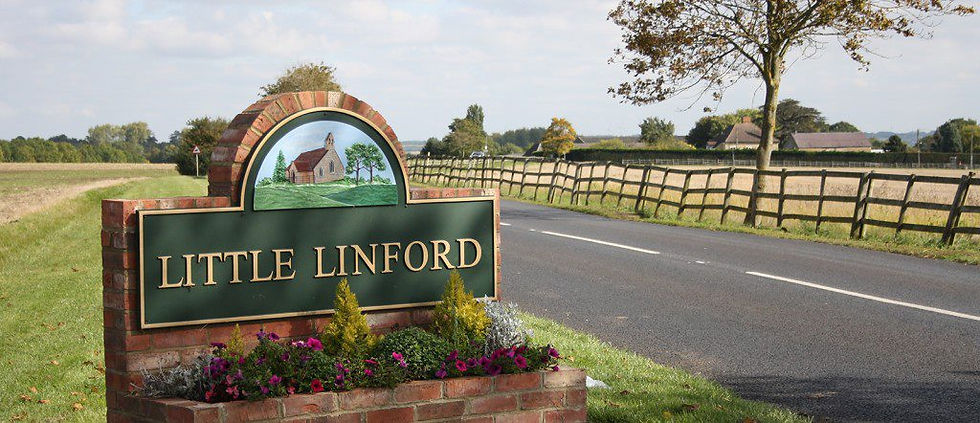
Haversham-cum-Little Linford Parish



EMAIL-BASED RESPONSE TO NEW TOWNS CONSULTATION
We have prepared the following email as a potential response to the Government's New Towns Consultation in response to several requests from residents for help in responding to the consultation. Whilst every response is valuable, we do strongly recommend responding via the form as this is likely to have more impact than an email. Our suggested response to the form-based submission can be found via this link to the form-response page
It is just a suggested response and please feel free to copy, paste and personalise as you wish or to use your own words entirely. Your email needs to be sent to NewTownsConsultation@communities.gov.uk
It is important that residents make their views known to the Government via the current consultation that closes at 11:59pm on 19 May. Detail of the consultation can be found at www.gov.uk/government/consultations/new-towns-draft-programme.
SUGGESTED RESIDENT EMAIL RESPONSE
Milton Keynes / Milton Keynes North
Subject: Formal Objection to Inclusion of Milton Keynes in the New Towns Programme
Dear Sir / Madam,
I am writing as a local resident to object to the inclusion of Milton Keynes in the New Towns Draft Programme Consultation.
My objection is based on national planning policy, infrastructure capacity, environmental constraints, flood risk, historic environment impacts, and the spatial planning principles of the National Planning Policy Framework (NPPF). Taken together, these demonstrate that Milton Keynes is neither a necessary nor an appropriate candidate for inclusion in a New Towns Programme.
1. Fundamental Issue: Not a New Town, but Urban Expansion
Milton Keynes does not meet the defining characteristics of a New Town. It is not a standalone, self-contained settlement created through a comprehensive, infrastructure-led designation process. Instead, it represents the outward expansion of an already established city.
The proposal therefore amounts to urban expansion being reclassified under New Town terminology, rather than genuine New Town creation.
This distinction is fundamental. New Towns are intended to:
-
create new settlements in appropriate strategic locations
-
be delivered through coordinated, infrastructure-led development from inception
By contrast, Milton Keynes is:
-
already an established urban area with significant committed growth
-
already governed by multiple adopted and emerging planning frameworks
-
already shaped by incremental, phased infrastructure delivery within an existing city structure
Extending Milton Keynes northwards does not create a new settlement; it simply expands an existing one into constrained land. In planning terms, this is conventional urban extension, not New Town formation, and should be assessed as such.
2. Existing Planning Context and Housing Delivery Reality
Milton Keynes is already a major planned growth location governed by:
-
Plan:MK (2019)
-
The emerging City Plan 2050 (providing for approximately 60,000 additional homes)
-
A number of made and emerging neighbourhood plans, including the Haversham-cum-Little Linford Neighbourhood Plan
These frameworks collectively already direct and accommodate significant growth across the area. In addition, there is a substantial housing pipeline nationally and locally, including:
-
Over 1 million homes in England with planning permission not yet built
-
Further undeveloped permissions within Milton Keynes itself
This clearly demonstrates that the issue is not land availability, but delivery and infrastructure sequencing. It also reinforces that housing need alone does not justify further large-scale release in constrained locations.
3. Infrastructure Capacity, Deliverability and Risk
A true New Town requires infrastructure-first, coordinated delivery that is demonstrably achievable within the plan period. However, this proposal appears to rely on a developer-led model of delivery, characterised by phased, market-driven expansion where infrastructure is delivered incrementally and often in response to viability rather than leading development.
This approach carries significant structural risks, including:
-
infrastructure lagging behind housing delivery
-
fragmented delivery across multiple land interests
-
reliance on viability assessments that may delay or reduce infrastructure provision
-
lack of unified long-term delivery control consistent with New Town principles
There is therefore insufficient evidence of a credible, integrated delivery mechanism to ensure that housing and infrastructure could be delivered concurrently at the required scale. The northern expansion of Milton Keynes would require major new infrastructure, including:
-
Significant transport upgrades, including potential M1 Junction 14a works
-
New River Great Ouse crossing infrastructure
-
Major utilities reinforcement
-
New schools, healthcare facilities, and supporting services at scale
Existing infrastructure is already spatially concentrated in central and southern Milton Keynes. Expansion northwards would therefore require extensive retrofitted provision, contrary to NPPF infrastructure-led principles (Paragraphs 20 and 104).
4. Flood Risk and Hydrological Constraints
A significant constraint on Milton Keynes, particularly the northern area, is flood risk associated with the River Great Ouse system. The area includes:
-
Functional floodplain (Flood Zone 3 areas)
-
Flood storage and conveyance corridors
-
Interconnected upstream and downstream catchment systems
Development at scale would:
-
reduce natural floodplain storage capacity
-
increase surface water runoff
-
potentially displace flood risk to other communities
-
require extensive engineered mitigation in a sensitive system
These are not isolated site issues but part of a wider hydrological network. The impacts are therefore cumulative and interdependent, affecting flood risk, ecology, infrastructure, and settlement form together.
This directly engages NPPF requirements to steer development away from areas of highest flood risk and avoid increasing risk elsewhere.
5. Specific Unsuitability of the Northern Expansion Area
The northern area of Milton Keynes has previously been identified as constrained due to:
-
River Great Ouse floodplain (including Flood Zone 3 areas)
-
Landscape sensitivity and designated countryside character
-
Ecological corridors and biodiversity networks
-
The need to maintain separation between settlements
-
Connectivity limitations relative to existing urban infrastructure
The Strategic Environmental Assessment also recognises that greenfield and landscape systems in such areas are likely to experience significant adverse effects. This is not a blank growth location, but a constrained landscape with known environmental limitations.
6. Environmental, Landscape, Historic and Community Impacts
Development would result in:
-
Permanent loss of countryside and rural identity
-
Erosion and fragmentation of existing rural communities
-
Coalescence of settlements, weakening the distinct identity of villages such as Haversham and surrounding communities
-
Loss of Best and Most Versatile (BMV) agricultural land and productive farmland
-
Increased flood risk and reduced natural flood storage capacity
-
Harm to ecological corridors, habitats, and protected species
-
Loss of Public Rights of Way and wider access to green space
-
Increased traffic and severance effects on already constrained rural roads
The area also contains significant historic environment and archaeological interest, including evidence of Roman activity and wider landscape archaeology reflecting long-established settlement patterns.
In addition, Haversham is recorded in the Domesday Book, forming part of a continuous historic settlement structure that has shaped the landscape over centuries. Large-scale development would therefore result in the irreversible loss of historic landscape character, archaeological context, and settlement continuity, undermining heritage assets of both local and national significance.
These impacts are not only environmental but also social, historic, and community-based, fundamentally altering the character, cohesion, and identity of existing settlements.
The cumulative effect would be a significant and irreversible transformation of rural identity, historic landscape structure, and settlement pattern across the area.
This conflicts with NPPF Paragraph 174, which requires the protection and enhancement of valued landscapes and their historic character and contribution to local identity.
7. Infrastructure and Service Pressure
Existing services in Milton Keynes and surrounding areas are already under strain, including:
-
GP capacity constraints
-
Pressure on hospital services
-
School place shortages in some catchments
-
Congested transport corridors
There is no clear evidence that these systems could accommodate further large-scale growth without significant deterioration in service provision.
8. Strategic Planning, Housing Need and Delivery Context
National evidence indicates that housing delivery constraints are not solely due to land supply, including:
-
A significant number of unbuilt planning permissions nationally
-
Substantial levels of long-term empty homes
This reinforces that the issue is delivery and build-out rates, not the need for additional large-scale greenfield release in constrained locations.
9. Planning System Compliance (NPPF and Section 38(6))
It is important to note that New Town proposals do not operate outside the National Planning Policy Framework or the statutory plan-led system. Section 38(6) of the Planning and Compulsory Purchase Act 2004 continues to apply, meaning decisions must be made in accordance with the development plan unless material considerations indicate otherwise.
Accordingly, any New Town designation must still comply with national policy requirements, including sustainable development, infrastructure-led growth, flood risk management, environmental protection, and the protection of the historic environment.
In addition, NPPF Paragraph 35 requires that plans and proposals be:
-
justified
-
effective
-
consistent with national policy
Milton Keynes does not meet these tests due to infrastructure, environmental, deliverability, and historic environment constraints.
10. Alternatives Exist
More suitable locations exist, including Tempsford, which offers:
-
Stronger strategic transport connectivity (including East West Rail)
-
Fewer environmental constraints
-
Lower infrastructure delivery risk
-
Greater potential for genuinely sustainable new settlement creation
There are also suggested locations which are predominantly Brownfield as therefore align with the Government's stated aim including:
-
Manchester Victoria North — regeneration of housing estates and industrial land
-
Leeds South Bank — city-centre brownfield redevelopment
-
Thamesmead — major brownfield regeneration
-
South Barking — urban regeneration
-
Plymouth City Centre — brownfield city-centre redevelopment
-
Brabazon — largely former airfield brownfield land
And these should be preferred to Milton Keynes given their better alignment to the policy.
These all represent more appropriate and deliverable strategic growth options.
Conclusion
Milton Keynes is not a suitable location for inclusion in the New Towns Programme.
It does not represent genuine New Town creation, but rather the expansion of an existing and already heavily planned urban area into a constrained environmental, hydrological, agricultural, historic, and community landscape. Its inclusion would raise serious concerns in relation to:
-
NPPF compliance (Paragraphs 11, 20, 35, 174, and historic environment policies)
-
Section 38(6) plan-led requirements
-
Infrastructure-led delivery and deliverability
-
Flood risk and hydrological integrity
-
Protection of Best and Most Versatile (BMV) agricultural land
-
Historic environment and archaeological protection
-
Rural identity and community cohesion
-
Sound and coherent spatial strategy
In particular, flood risk, landscape sensitivity, loss of BMV land, erosion of rural community identity, and irreversible harm to historic landscape character make Milton Keynes fundamentally unsuitable for designation under a New Towns framework.
For these reasons, I strongly object to the inclusion of Milton Keynes in the New Towns Programme and request that it is removed from further consideration.
Yours faithfully,
[Name]